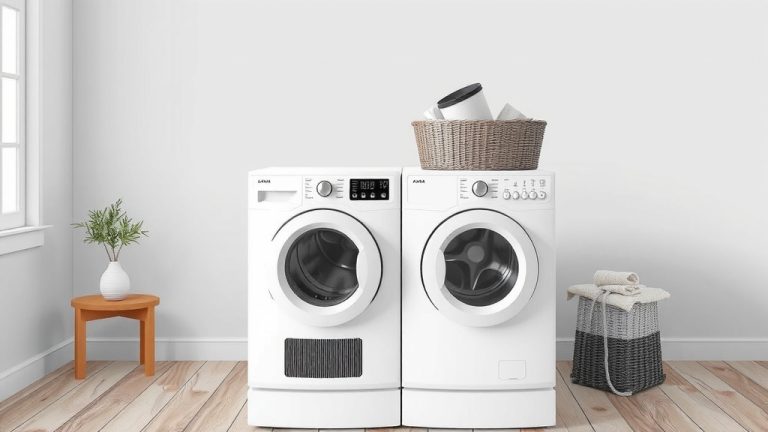
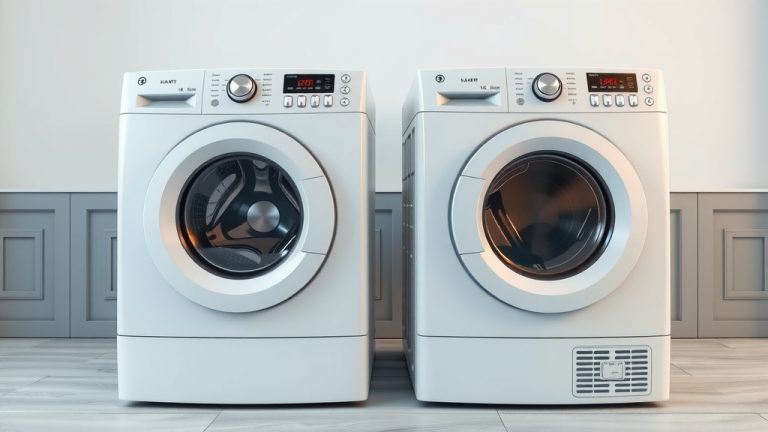
Washer and Dryer Pedestals: What They’re Used For
Washer and dryer pedestals are sturdy platforms that lift your machines up off the floor. They make your laundry room more comfortable, more organized, and easier to use. You use them to reduce bending, add extra storage space, and bring your machines to a more ergonomic height.
We found that most people buy pedestals to stop the back pain that comes from constantly leaning over to grab clothes. They also give you a built-in drawer to hide detergent, dryer sheets, or other laundry supplies. Beyond comfort and storage, they can even help reduce the vibration and noise from your machines during the spin cycle.
- Reduce back strain: They raise the machines about 13 to 15 inches off the floor, so you don’t have to bend over as much.
- Add hidden storage: Most pedestals come with a large, pull-out drawer perfect for holding laundry supplies.
- Cut down on noise: They help absorb the vibration, making your washer and dryer run a bit quieter.
- Perfect height for your dryer: You won’t have to crouch down to transfer heavy, wet clothes.
- Must match your machine: They are not universal, so you need to buy the specific pedestal that fits your washer or dryer model.
Below, we break down the real benefits of using pedestals, what to look for when buying them, and whether they are the right choice for your specific laundry setup.
The Main Reasons People Buy Washer and Dryer Pedestals
Pedestals exist for one big reason: to make your laundry routine less of a workout. We found that the main draw is the height boost. Most machines sit too low, forcing you to bend and twist just to grab a sock.
Lifting your machines by about 13 to 15 inches brings the drum opening closer to your waist. That simple change cuts down on awkward reaching. It is a small adjustment that makes a huge difference in how your back feels after laundry day.
Stopping the Back Pain Before It Starts
Think about how many times you bend over during one load of laundry. You reach in to pull out wet clothes. You squat to check the lint filter. You crouch to grab a fallen sock. It adds up fast.
Over time, that constant motion puts stress on your lower back. Many experts note that repetitive bending is a common cause of strain and fatigue (Cleveland Clinic). Raising the machines puts the drum right at hip level.
This means you stand tall while loading and unloading. You use your arms instead of your spine. For anyone with chronic back issues, this simple change feels like a lifesaver.
How Much Higher Do Pedestals Really Go?
Standard pedestals add roughly 13 inches of height. Some models go up to 16 inches. That puts the top of your washer at about counter height.
If you are taller than average, you might want an extra-tall pedestal. If you are on the shorter side, a standard height works well. The goal is to have the drum opening land between your hip and your waist for the most comfortable reach.
Turning Empty Space Into Useful Storage
Laundry rooms are usually small. Every inch counts. We found that pedestals double as storage units, giving you a dedicated place to put your supplies.
Most pedestals come with a large pull-out drawer. It slides out smoothly and holds a surprising amount of stuff. This is where you can stash your detergent, fabric softener, and dryer sheets.
What Can You Fit Inside the Drawer?
The drawer is deeper than you might think. We found that you can fit a full-size detergent bottle, a box of dryer sheets, and a stain remover all at once. Some people use them for things like:
- Extra laundry baskets that fold flat
- Bleach and color-safe alternatives
- Lint rollers and fabric shavers
- Spare dryer belts and hoses
- Cleaning rags and sponges
- Pet hair removal tools
Having a dedicated spot for these items keeps your counters clear. You will not have to hunt for supplies in a cabinet or on a high shelf. Everything you need is right where you are working.
Do You Need a Pedestal With a Drawer?
Not every pedestal has a drawer. Some are just solid platforms. These are cheaper but offer no extra storage.
We found that the drawer is the main reason people choose one brand over another. If you have a tiny laundry room, the extra storage is worth the upgrade. If you have plenty of cabinets, you might skip the drawer to save money.
Quieter Laundry and Less Machine Shake
Washers and dryers vibrate. That shaking can be annoying, especially if your laundry room is near a bedroom or living area. Pedestals help with this problem.
The structure of a pedestal absorbs some of the movement. It keeps your machine stable and reduces the rattle. We found that this is a major selling point for people with front-loading washers, which spin at high speeds.
How Pedestals Reduce Vibration
Your machine transfers motion to the floor without a pedestal. That vibration travels through the floorboards and walls. It can make glasses clink in a nearby cabinet.
A pedestal acts like a buffer. It sits between the machine and the floor, catching some of that energy. The result is a smoother spin cycle and less noise. Many guidelines suggest that proper leveling and a stable base are key to reducing machine noise (U.S. Department of Energy).
Do You Still Need Anti-Vibration Pads?
Pedestals do most of the work, but they do not fix everything. If your machine is off-balance, you will still feel some shaking. Anti-vibration pads can help in that case.
Use a level to check your machine after installation. If it rocks even slightly, adjust the feet. A stable machine on a pedestal is the quietest setup you can get.
The Practical Side of Loading and Unloading
There is a hidden benefit that people do not expect. Pedestals make it easier to transfer clothes from the washer to the dryer. Without a pedestal, you are bending down to grab wet, heavy items and standing back up to toss them in.
That up-and-down motion is tiring. With a pedestal, both machines are at the same height. You just swing the clothes from one drum to the other without changing your posture.
Less Crouching for the Lint Filter
Dryer lint filters are usually near the bottom of the machine. On a floor-level dryer, you have to squat down to reach them. That is a minor annoyance that adds up.
With a pedestal, the lint filter is right at hip height. You can clean it out in two seconds without bending a knee. It is a tiny convenience that you will appreciate every single time you use the dryer.
Key Differences Between Pedestal Options
Not all pedestals are the same. We found that they vary in height, storage, and features. You need to match the pedestal to your specific machine model for a proper fit.
| Feature | Standard Pedestal | Premium Pedestal |
|---|---|---|
| Height added | 13 to 15 inches | 15 to 17 inches |
| Storage | Single drawer | Drawer plus extra shelf |
| Material | Steel frame | Steel with dampening system |
| Extra features | None | Built-in sink or folding tray |
We found that premium models cost more but add real value. A built-in folding tray can turn your laundry room into a more functional space. A dampening system makes the machine even quieter.
Are Pedestals Right for Your Laundry Room?
Pedestals are not for everyone. They add height, which means your machines will be taller. If you have top-loading machines or limited ceiling space, this might be a problem.
We found that front-loading machines pair best with pedestals. The flat top gives you a place to sort clothes or fold items. You can even use the top as a counter for a laundry basket.
Checklist Before You Buy a Pedestal
Before you order one, run through this quick checklist. It will help you avoid buying the wrong piece.
- Measure the width of your washer and dryer to find the matching pedestal
- Check your ceiling height to make sure the raised machines still fit
- Decide if you need a drawer or if a solid base is enough
- Confirm that your machine is front-loading, not top-loading
- Look for a model with adjustable feet for easy leveling
- Compare the weight capacity to your machine’s total weight
Take your time with this. A pedestal is a long-term purchase. You want to get it right the first time so you are not stuck with a mismatched setup.
What About Stacking Instead of Pedestals?
If space is super tight, you might be thinking about stacking your washer and dryer. That is a different solution to the same problem. Stacking puts the dryer on top and the washer on the bottom.
We found that stacking saves floor space but does not fix the bending problem. The washer still sits low. You still have to crouch to load it. A pedestal lifts both machines up so you avoid that strain completely.
Which Setup Fits Your Space Best?
Here is the simple breakdown. If you have a narrow closet, stacking is the way to go. If you have a wider room, pedestals work better. You can even combine them by placing the washer on a pedestal and stacking the dryer above it.
That hybrid setup gives you storage below and saves vertical space. Many people we found use this configuration in small apartments and tight laundry closets.
Do Pedestals Save You Money in the Long Run?
Pedestals cost anywhere from $150 to $400 each. That is a chunk of change. But think about what you get in return.
You avoid the physical toll of bending and reaching. You protect your back from strain. You also get storage that might save you from buying a separate cabinet or shelving unit.
We found that many users say the comfort alone is worth the price. The storage is a bonus. If you do laundry multiple times a week, the convenience adds up quickly.
The Health Angle You Should Consider
Repetitive bending is not just uncomfortable. It can lead to real problems over time. Many guidelines recommend reducing awkward postures and repetitive motions to protect your spine (National Institutes of Health).
Think of a pedestal as an investment in your posture. It keeps your body in a neutral position. That is easier on your joints, your muscles, and your lower back.
We found that people with arthritis, back pain, or mobility issues benefit the most. If you have had surgery or are recovering from an injury, the reduced bending is a game-changer. Talk to your doctor if you are unsure, but the logic is simple: less strain means less pain.
Making the Final Call on Pedestals
So, are washer and dryer pedestals worth it? For most people, yes. They raise the machines to a comfortable height, add storage, and quiet things down.
We found that the main downside is the upfront cost and the need to match your exact machine model. But the daily comfort and convenience usually win out. If you are tired of aching after laundry day, a pedestal is a simple fix.
Measure your space, check your machine model, and pick a pedestal with the features you need. Your back will thank you, and your laundry room will look a whole lot tidier too.
Conclusion
Washer and dryer pedestals do more than just raise your machines. They protect your back, add smart storage, and make laundry day feel less like a workout. We found that the height boost alone is worth it for most people, especially if you deal with back pain or mobility issues.
You get a built-in drawer for supplies, less bending for lint filters, and a quieter spin cycle. The main catch is matching the pedestal to your exact machine model and measuring your space first.
If you are tired of crouching and reaching every time you do laundry, a pedestal is a simple fix. Measure your washer and dryer today, check your ceiling height, and order a pedestal that fits your model. Your back will thank you on the very first load.
Frequently Asked Questions
Can I put a pedestal under a top-loading washer?
You generally cannot use a standard pedestal with a top-loading washer. Top-loaders open from the top, so raising them does not help with bending and can make it harder to reach inside.
Some manufacturers offer special risers for top-loaders, but they are rare. If you have a top-loader, you are better off skipping the pedestal and focusing on other storage solutions.
Will a pedestal make my washer and dryer too tall?
A standard pedestal adds about 13 to 15 inches of height. That puts the top of your machines at counter height, which works well for most people.
If you are shorter than average, the raised height might feel awkward. Measure from the floor to your hip or waist and compare that to the drum opening height before you buy.
Do I need to buy the same brand pedestal as my washer and dryer?
Yes, you should buy a pedestal from the same brand as your machines. Pedestals are not universal, and they are designed to fit specific models.
Using a mismatched pedestal can leave your machine unstable or make the drawer misalign. Check your washer and dryer model numbers and search for the matching pedestal from that manufacturer.
Can I install a pedestal myself or do I need a professional?
Most pedestals are designed for DIY installation. You typically just lift the machine, slide the pedestal underneath, and secure it with the included brackets.
That said, lifting a heavy washer or dryer is not easy. If you have back problems or limited strength, ask a friend for help or hire a handyman. It takes about 30 minutes per machine.
Will a pedestal void my washer or dryer warranty?
Using a pedestal will not void your warranty if it is the correct matching model from the same brand. Manufacturers design these pedestals to work with their machines.
If you use a third-party or universal pedestal, you take a small risk. Always check your warranty terms and keep your receipt in case you need to make a claim.