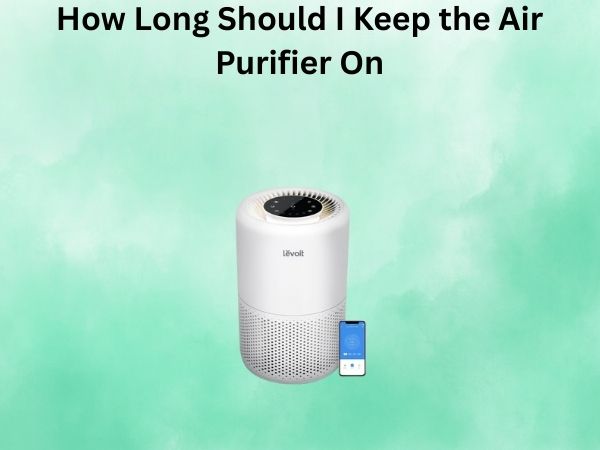
How Long Should I Keep the Air Purifier On? A Complete Guide to Optimal Usage
So, you’ve brought home your new air purifier, and the immediate question pops up: what’s the optimal way to run it? Is it a continuous 24/7 operation, or should you only switch it on when the air feels noticeably stale? This is a very common dilemma, and the truth is, the best approach isn’t always obvious. I’m here to guide you through understanding exactly when and for how long to keep your air purifier running for maximum benefit.
Understanding Your Air Purifier’s Purpose
Before we dive into how long to run your air purifier, let’s talk about what it actually does. Think of an air purifier like a bouncer at a nightclub—its job is to keep the unwanted guests (pollutants, allergens, and particles) out of your space. It works by pulling air through filters that trap dust, pollen, pet dander, mold spores, and other airborne contaminants.
The thing is, your air purifier can’t work its magic if it’s sitting idle in the corner. It needs to be running to actively clean the air around you. But that doesn’t necessarily mean it needs to run all day and night without stopping.
Factors That Determine How Long to Run Your Air Purifier
Your Home’s Air Quality
This is probably the biggest factor in deciding how long to run your purifier. If you live in an area with poor outdoor air quality, you’ll definitely want to run it longer than someone living in a pristine mountain town. Similarly, if you have pets, smokers in the household, or live on a busy street, your air quality is being compromised more frequently.
A simple way to assess this is to invest in an air quality monitor. These devices measure PM2.5 and PM10 particles, giving you real data about what’s actually floating around in your home. Once you know your baseline, you can make informed decisions about runtime.
The Size of Your Room or Home
Imagine trying to sweep a massive warehouse with a regular broom—it’s going to take forever, right? The same principle applies to air purifiers. The larger your space, the longer your purifier needs to run to adequately clean the air.
Most air purifiers come with a Clean Air Delivery Rate, or CADR rating, along with the room size they’re designed for. If you’re using the right size purifier for your space, you can expect to achieve air cleaning more efficiently. Running time will be shorter in smaller rooms and longer in larger ones.
The Type of Pollutants Present
Not all air pollutants are created equal. Dust and pollen are relatively easy for a purifier to capture, while certain chemicals and gases require more sophisticated filters like activated carbon. If you’re dealing with heavy smoke or strong odors, your purifier will need more time to process and filter the air effectively.
Your Air Purifier’s Filter Condition
Here’s something many people overlook: a clogged filter works much harder and less efficiently than a clean one. It’s like trying to breathe through a straw—technically possible, but exhausting. If your filters haven’t been changed in months, your purifier is working overtime and won’t be as effective, even if it’s running constantly.
The 24/7 Approach: Should You Run It Continuously?
Pros of Running Your Purifier Around the Clock
Let’s talk about leaving your air purifier on all day and night. There are definitely some advantages to this approach:
- Continuous air cleaning means you’re always breathing cleaner air
- You don’t have to remember to turn it on and off
- It prevents pollutants from accumulating during off-hours
- Particularly beneficial for people with severe allergies or asthma
- It maintains consistent air quality throughout your home
Cons of 24/7 Operation
However, running your purifier continuously does come with some drawbacks:
- Higher electricity consumption and increased utility bills
- Filters degrade faster, requiring more frequent replacements
- Some models can be noisy, potentially disrupting sleep
- Unnecessary energy use during times when outdoor air quality is good
- Increased wear and tear on the motor and fan
So yes, you could run your air purifier 24/7, but it might not be the most practical or economical choice for everyone.
Optimal Runtime for Different Living Situations
If You Live Alone or in a Quiet Apartment
Living alone means you’re probably the only source of indoor air pollution in your space. Running your purifier for 8 to 12 hours daily should be sufficient, especially if you can do it during times when you’re most active. Focus on running it during the evening and early morning when you’re home and spending the most time indoors.
If You Have Children or Pets
Kids and pets are like little pollution factories. They track in dirt, shed dander, and create dust when they play. In homes with children or animals, I’d recommend running your purifier for 12 to 16 hours daily, particularly in common areas where family members spend the most time.
If Someone in Your Home Has Allergies or Respiratory Issues
This is where running time becomes genuinely important. If you’re sharing your space with someone who has asthma, allergies, or other respiratory conditions, aim for 16 to 20 hours of daily operation. These individuals are more sensitive to air quality, and consistent purification can make a real difference in their comfort and health.
If You Live in a High-Pollution Urban Area
City living often means compromised outdoor air quality. Exhaust fumes, industrial emissions, and construction dust are constantly trying to make their way indoors. In these situations, running your purifier nearly 24/7 might actually be the most cost-effective option in the long run. Your health is worth more than the extra few dollars on your electricity bill.
Seasonal Considerations for Air Purifier Usage
Spring and Summer Months
During warmer months, pollen counts are typically higher, and you’re probably opening windows more frequently. You might want to increase your purifier’s runtime during these seasons. Conversely, if your air quality is naturally better during summer in your region, you could potentially reduce runtime slightly.
Fall and Winter
Cold weather brings its own challenges. People spend more time indoors with windows closed, which means indoor pollutants accumulate faster. Additionally, heating systems can circulate dust more effectively. Fall also brings leaf mold and mildew spores. Winter sees increased smoke and particulate matter from fireplaces and heating sources in many regions.
My recommendation? Run your purifier longer during these cooler months—think 12 to 18 hours daily, depending on your specific situation.
Smart Running Strategies to Maximize Efficiency
The Zone Approach
Rather than trying to clean your entire home at once, consider focusing your efforts. Run your purifier in the rooms where you spend the most time—your bedroom for 8 hours at night, your living room during the day, and your workspace during work hours. This targeted approach is more efficient than running multiple purifiers or one purifier on high settings constantly.
Using Your Purifier’s Fan Speed Settings
Most air purifiers have adjustable fan speeds. Here’s my strategy: use the lowest speed during sleep or quiet hours to minimize noise while still maintaining air circulation. Increase to medium speed during normal daytime hours, and switch to high speed only when you notice air quality declining or after activities that generate extra pollutants, like cooking.
Smart Purifiers and Sensors
If you’re considering buying a new unit, look for air purifiers with built-in air quality sensors. These smart devices automatically adjust their runtime and fan speed based on real-time air quality readings. You get optimal purification without having to manually manage settings, and you save energy too.
Scheduling and Timers
Use your purifier’s built-in timer function if it has one. Set it to run before you wake up, throughout the day when you’re home, and several hours before bedtime. This ensures the air is as clean as possible during the times you spend the most time in your home.
Common Mistakes People Make with Air Purifier Runtime
Running It Only Sporadically
Some people treat their air purifier like an emergency room visit—only turning it on when they notice bad air. Here’s the problem: by the time you notice poor air quality, it’s already been circulating for a while. Consistent, predictable operation is much more effective than sporadic bursts.
Never Cleaning or Replacing Filters
This is probably the biggest mistake I see. People buy an expensive purifier and then never maintain it. A dirty filter is like trying to breathe through a pillow—technically possible but terribly inefficient. Check your filter monthly and replace it according to the manufacturer’s recommendations, typically every 6 to 12 months depending on usage and air quality.
Ignoring Room Size and Purifier Capacity
Using a purifier designed for a 300-square-foot room in a 1,500-square-foot open plan living space? You’re fighting a losing battle. Even if you run it 24/7, it won’t adequately clean the air. Make sure your purifier is appropriately sized for your space.
Running It with Windows and Doors Open
This one seems obvious, but you’d be surprised how many people do this. Running your purifier while windows are open is like trying to fill a bucket with a hole in the bottom. Close windows and doors during operation, especially in high-pollution areas.
How to Know If You’re Running It Long Enough
Signs Your Purifier Needs More Runtime
- You notice dust accumulating quickly on surfaces
- Allergies or respiratory symptoms are worsening
- You notice odors lingering in your home
- Pet dander seems heavier or more noticeable
- Your air quality monitor shows consistently poor readings
Signs Your Current Runtime Is Adequate
- Your home smells fresh without artificial air fresheners
- Dust accumulation is minimal between cleaning sessions
- Allergy symptoms have noticeably improved
- Your air quality monitor shows good to excellent readings
- You’re breathing easier, especially at night
Energy Consumption and Cost Considerations
Let’s talk money. An average air purifier uses between 30 and 200 watts, depending on the model and fan speed. Running a 100-watt purifier for 12 hours daily costs roughly $44 per year in electricity (at average US rates). Running it 24/7 would cost about $88 annually. For most people, that’s a reasonable investment for cleaner air.
However, when you factor in filter replacement costs—typically $50 to $150 per filter—extended runtime does increase your overall cost. This is why targeting your purifier usage to the times and places where you spend the most time makes financial sense.
The Bottom Line: Finding Your Perfect Runtime
There’s no one-size-fits-all answer to how long you should keep your air purifier on. It depends on where you live, who lives with you, your health needs, and your air quality situation. However, I’d suggest starting with this baseline: run your purifier for at least 8 to 12 hours daily, focusing on times when you’re home and awake.
Monitor how you feel. Pay attention to your air quality readings if you have a monitor. Adjust your schedule up or down based on real results, not just assumptions. And please, please maintain those filters regularly—it’s the most important thing you can do to ensure your purifier works effectively regardless of runtime.
Conclusion
The question of how long to keep your air purifier on isn’t one with a universal answer, but hopefully this guide has helped you understand the factors that matter. Your air purifier is an investment in your health and comfort, and like any investment, it performs best when used thoughtfully and maintained properly.
Start by assessing your specific situation: your room size, air quality in your area, the health needs of your household, and your budget. Begin with a moderate runtime of 10 to 12 hours daily, then adjust based on how you feel and what your air quality readings tell you. Some people will find that 24/7 operation makes sense, while others will do fine with 8 hours daily. The key is finding the balance between clean air and practical, economical operation that works for your unique circumstances.
Remember, a well-maintained air purifier running for an appropriate duration is far more effective than an expensive unit with dirty filters running constantly. Focus on consistency, maintenance, and smart scheduling, and you’ll breathe easier knowing you’re doing everything you can to improve your indoor air quality.
Frequently Asked Questions
Is it safe to run an air purifier 24/7?
Yes, it’s completely safe to run your air purifier around the clock. Most modern air purifiers are designed to operate continuously without any safety concerns. However, doing so will increase your electricity costs and wear out your filters faster, requiring more frequent replacements. If safety is your concern, rest assured that air purifiers are built for extended operation. The main considerations are practical ones related to cost and maintenance, not safety.
Should I run my air purifier while sleeping?
Running your air purifier while you sleep is actually a great idea, but here’s the catch: most purifiers are noisy, especially on higher fan speeds. I recommend using the lowest fan speed setting during sleep hours, or better yet, investing in a quiet model specifically designed for bedrooms. Since you spend about a third of your day sleeping, running your purifier during these hours ensures you’re breathing clean air during an extended period in one room. Just place it away from your bed to minimize noise disruption.
How often should I replace my air purifier’s filters?
Filter replacement frequency depends on several factors, including how often you run your purifier, your local air quality, and whether you have pets. Generally, you should check your filters monthly and replace them according to the manufacturer’s recommendations, which typically ranges from every 6 to 12 months for HEPA filters. If you’re running your purifier constantly in a high-pollution area or a home with pets, you might need to replace filters more frequently—perhaps every 3 to 6 months. A clogged filter is ineffective, so don’t skip this maintenance task.
Can running an air purifier all night harm your health?
Running an air purifier throughout the night is not harmful to your health. In fact, many sleep experts actually recommend it, especially for people with allergies or asthma. Clean air while you sleep can lead to better rest quality and fewer nighttime symptoms. The only potential issue is noise disruption if your model isn’t designed for quiet operation. If noise is a concern, look for air purifiers with whisper-quiet settings or specifically marketed as bedroom-friendly. Otherwise, feel free to run yours during sleep hours without worrying about any negative health effects.