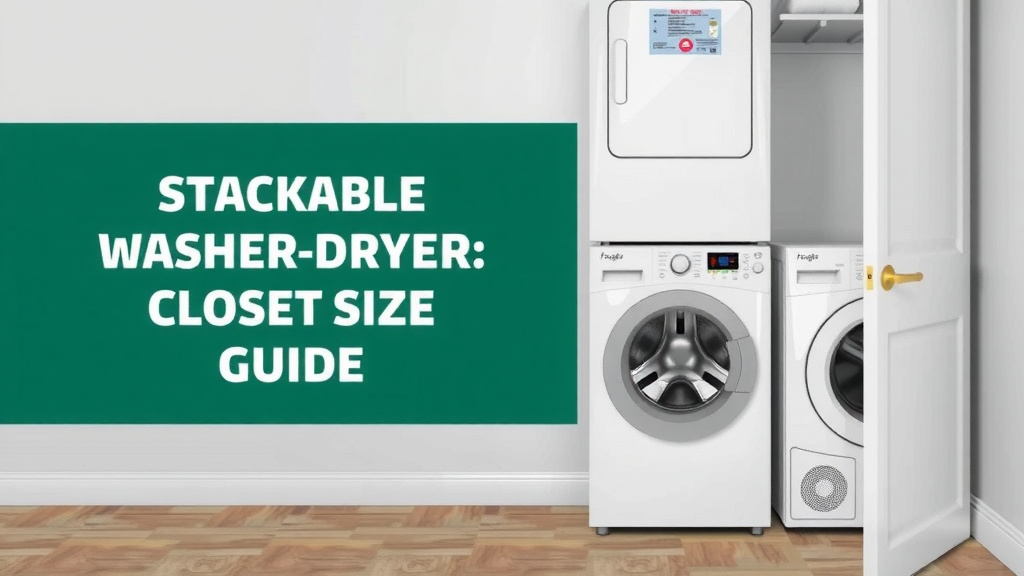
Stackable Washer Dryer Closet Size Guide
You can fit a stackable washer and dryer in a closet that is at least 30 inches wide and 30 inches deep. Most standard closets are actually large enough. Make sure to check the specific dimensions of your chosen unit. Manufacturers provide these details.
When planning your laundry space, consider more than just the footprint. You’ll need adequate ventilation and access to plumbing and electrical hookups. Thinking about door swings is also important. Properly measuring your closet is the first step to success. It prevents costly mistakes.
- Closets need to be at least 30 inches wide and 30 inches deep.
- Check the specific dimensions of your chosen washer and dryer model.
- Ensure there’s space for ventilation and utility hookups.
- Measure your closet carefully before you buy.
Let’s break down the closet dimensions and space requirements you’ll need for your new stackable laundry set.
Fitting Your Stackable Washer and Dryer: Closet Size Essentials
Wondering if your closet can handle a stackable washer and dryer? You’re not alone! Many homeowners look to these compact laundry solutions to save space. We’re here to help you figure out the right dimensions.
Generally, a closet needs to be at least 30 inches wide. It also needs to be at least 30 inches deep. This allows enough room for most standard stackable units. Think of it like a little laundry room tucked away. Always double-check the specific measurements of the appliances you’re considering. Manufacturers provide detailed specs.
Minimum Closet Dimensions: The Bare Minimum
Let’s talk about the absolute smallest space you’ll need. A closet measuring 30 inches wide by 30 inches deep is the starting point for many stackable units. This width accommodates the footprint of both the washer and the dryer stacked. The depth is crucial for fitting the machines themselves.
Width Considerations
The 30-inch width is the minimum for the appliances to stand side-by-side, then stacked. You need this space just for the units. Think about the actual width of the washer and dryer. They are usually around 27 inches wide each. Stacking them means the width requirement doesn’t double.
Depth Requirements
Now, let’s consider depth. The 30-inch depth is for the machines to fit within the closet. You also need to account for the doors and any hoses or vents attached to the back. We’ll cover clearances in a bit, but the basic cabinet depth is a good starting point.
Beyond the Footprint: Essential Space Requirements
While the machine’s dimensions are key, fitting them into a closet involves more than just matching numbers. You need space for connections, airflow, and easy access. It’s like planning a small kitchen; you need room to move and work.
Clearance for Safety and Maintenance
Proper clearances are vital. Manufacturers recommend leaving a little wiggle room around the appliances. This is for several reasons. It allows for proper ventilation, which prevents overheating. It also makes it easier to access connections for repairs or maintenance.
Front Clearance
For the front, you’ll want enough space to open the doors fully. This is especially true for the dryer door. You also need room to load and unload laundry. Some sources suggest at least 12 inches of clear space in front of the machines. This ensures you can comfortably maneuver laundry baskets.
Side and Rear Clearance
On the sides and back, clearances are typically smaller. You might need just a few inches (e.g., 1-3 inches) for airflow. This prevents the machines from being pressed directly against walls. Check your appliance manual for exact side and rear clearance needs. This small gap is critical for air circulation.
Ventilation Needs: The Unsung Hero
Dryers, especially, need good ventilation. Without it, your clothes might take longer to dry, and the machine could overheat. Some stackable units are ventless, which simplifies things. However, vented dryers require a duct to the outside. This duct needs space to run.
Vented Dryer Requirements
If your dryer needs venting, you’ll need a pathway for the duct. This might mean a hole in the wall or a specific vent pipe setup. Ensure the closet design accommodates this. You don’t want the ductwork to be kinked or crushed. That defeats the purpose and can be a fire hazard.
Ventless Dryer Considerations
Ventless dryers, often using condensation or heat pump technology, are simpler. They don’t require an external vent. However, they do generate heat and moisture. So, some airflow is still beneficial. They often require draining collected water, which might need a space for a small tank or a plumbing connection.
Access to Utilities: Plumbing and Electrical
Your stackable washer and dryer will need water and electricity. The closet location must be practical for these hookups. This is a major factor in whether a space will work.
Water Supply
Washers need hot and cold water lines. Ensure these are accessible within or near the closet. The hoses connecting the washer to the supply lines also need a little room. You don’t want them bent sharply. Many closets aren’t pre-plumbed, so you might need a plumber.
Drainage
A drainpipe is essential for the washer to empty water. This is typically a standpipe that rises from the floor. Again, this is often not present in a standard closet. You’ll need to plan for this if you’re converting a non-laundry space.
Electrical Outlet
Both the washer and dryer need electricity. Most dryers require a dedicated 240-volt outlet. Washers typically use a standard 120-volt outlet. Ensure the closet has the correct outlets installed. An electrician can help ensure your setup is safe and up to code.
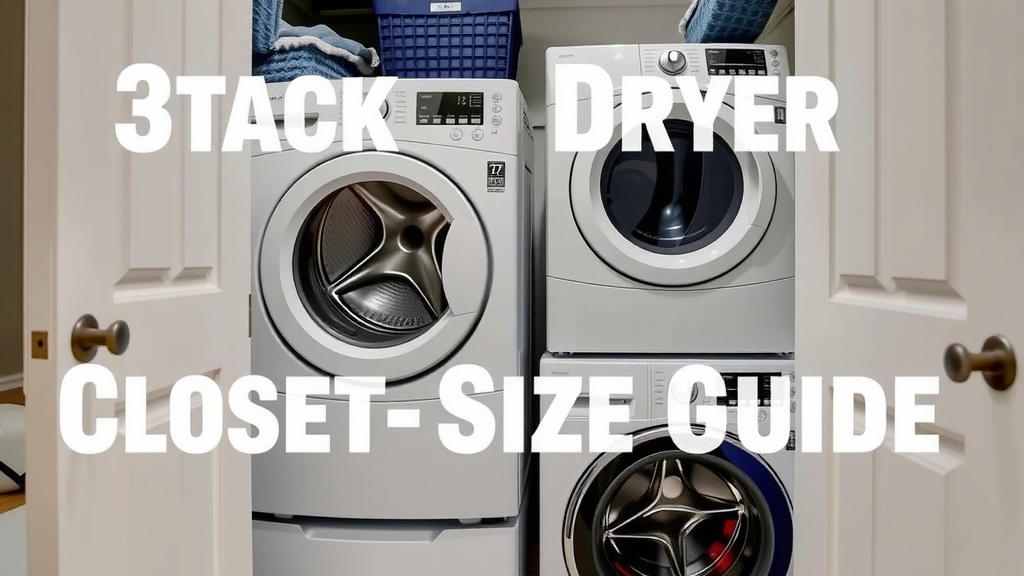
Door Swing and Accessibility
Don’t forget about the closet doors! How will they open? Will they interfere with the appliances or your ability to use them?
Understanding Door Swings
If your closet has a standard hinged door, you need to ensure it opens wide enough. The door shouldn’t hit the stacked units. Sometimes, outward-swinging doors are best. Pocket doors or sliding doors can also be excellent space-saving solutions for laundry closets.
Alternative Door Options
Consider bi-fold doors if space is extremely tight. These fold in half as they open. You just need enough clearance for each half to fold back. Whatever door type you choose, make sure it doesn’t block access to the machines when open.
A Simple Checklist for Your Laundry Closet Project
Ready to take stock? Here’s a quick checklist to help you measure up your space:
- Measure the exact width and depth of your closet.
- Note the height of the closet too – you need enough room for stacking.
- Check where existing plumbing and electrical hookups are located.
- Consider the space needed for dryer venting (if applicable).
- Think about door swing and how it impacts usability.
- Measure your chosen stackable washer and dryer unit dimensions carefully.
Conclusion
You’ve learned that fitting a stackable washer and dryer into a closet is very achievable. The key is understanding the space requirements. You generally need at least 30 inches wide and 30 inches deep. But remember to factor in clearances for ventilation, maintenance, and door swings. Don’t forget the essential utility hookups for water, drainage, and electricity. Your next step is to measure your closet carefully and compare it with the specific dimensions of the appliances you’re considering. This planning ensures your new laundry setup works perfectly in your home.
Frequently Asked Questions
Will a standard 30-inch deep closet work for a stackable washer and dryer?
A 30-inch deep closet is usually the minimum you’ll need. This depth accommodates most standard stackable units. However, always check the manufacturer’s specs. You may need a bit more depth for hoses, vents, and door clearance.
Do I need extra space around the stackable units besides their dimensions?
Yes, you do. Manufacturers recommend small clearances on the sides and back for airflow. You also need ample space in front for loading laundry and opening doors. These clearances help your machines run efficiently and safely.
What if my closet doesn’t have plumbing or an electrical outlet?
If your chosen closet lacks utility hookups, you’ll need to have them installed. This typically involves hiring a plumber for water and drainage and an electrician for the proper outlets. It’s essential for functionality and safety.
Can I use a closet with bi-fold doors for my stackable machines?
Bi-fold doors can work well in tight spaces. They fold inward, taking up less swing space than traditional doors. Just ensure there’s enough room for the doors to fold back without hitting the appliances.
Are ventless stackable dryers easier to fit into small closets?
Ventless dryers are often simpler because they don’t require an external vent. This removes the need for ductwork running through your closet. However, they still generate heat and moisture, so some airflow around the unit is still beneficial.